Columbus Faces $380M Infrastructure Gap as Federal Transit Funds Stall in Congress
Every morning, thousands of Columbus residents wake up before dawn to catch a bus that may not arrive on time — or may not arrive at all. Now, a $380 million federal funding shortfall threatens to make that daily struggle significantly worse, and city officials are sounding the alarm.

Columbus city leaders and Central Ohio Transit Authority (COTA) officials warn that stalled congressional budget negotiations are putting the region’s most ambitious public transit expansion in decades at serious risk. The consequences, they say, will not be felt equally across the city.
—
What’s at Stake: A Three-Year Delay and 140,000 Residents Left Behind
The funding gap centers on federal infrastructure dollars that Columbus was counting on to accelerate COTA’s bus rapid transit network across the east and south sides of the city. Without those funds, officials project the expansion could be delayed by as many as three years — a timeline that carries enormous human costs.
An estimated 140,000 low-income residents live in the corridors targeted by the BRT expansion. These are neighborhoods where car ownership rates are low, job centers are distant, and existing bus service is already stretched thin. For many of these residents, reliable rapid transit is not a convenience — it is the difference between keeping a job and losing one.
The planned BRT lines were designed to connect underserved communities to major employment hubs, healthcare facilities, and educational institutions on the east and south sides. A three-year delay does not simply push back a ribbon-cutting ceremony. It extends, by three more years, the daily transportation barriers that limit economic mobility for tens of thousands of Columbus families.
—
The Federal Funding Freeze: What’s Happening in Congress
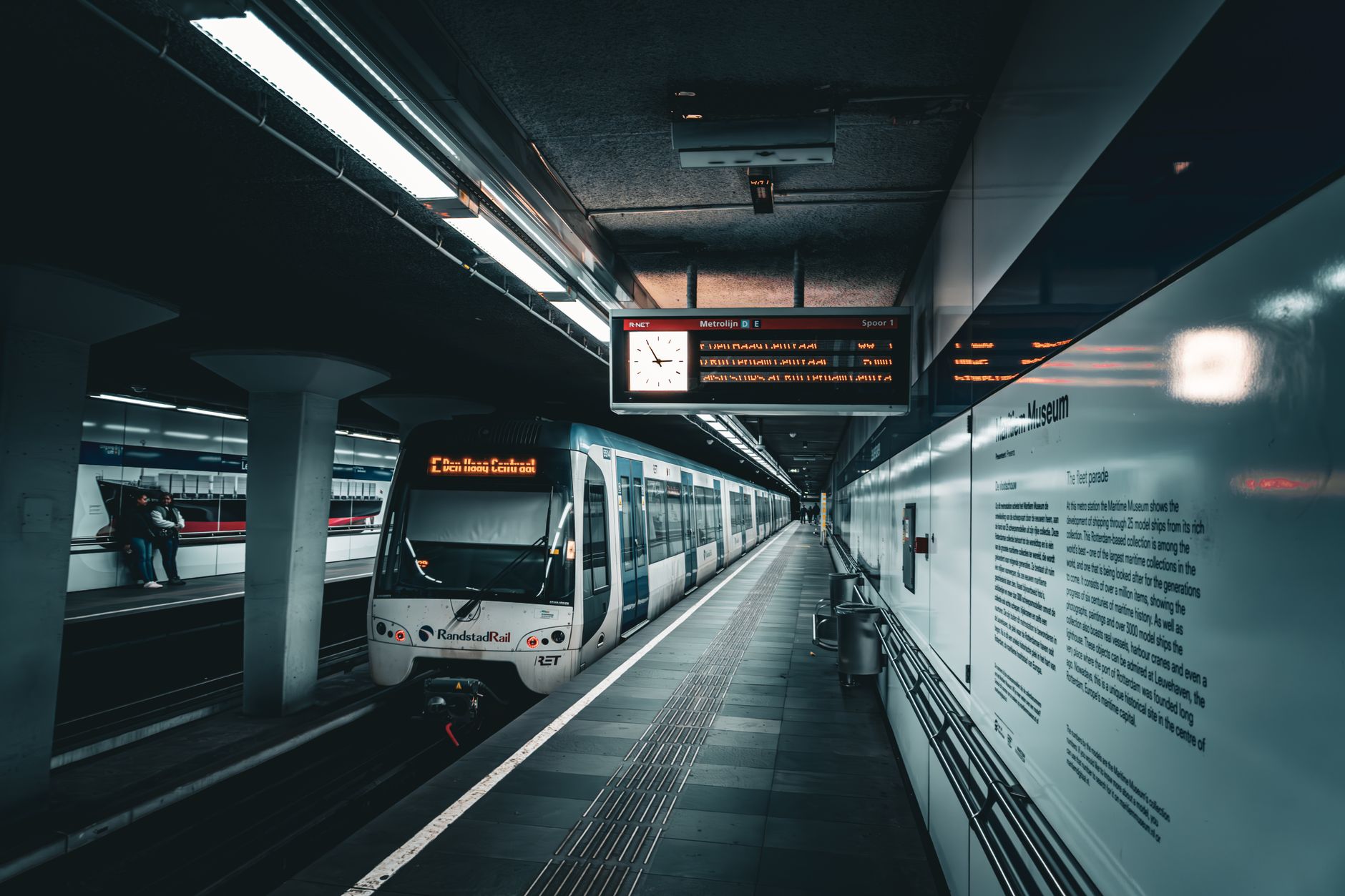
Columbus’s transit funding is caught in a broader national standoff. Federal infrastructure appropriations — including transit capital investment grants administered through the Federal Transit Administration — have become entangled in congressional budget negotiations that have dragged on for months without resolution.
Cities across the country face similar uncertainty, but Columbus is in a particularly precarious position. The region has already committed significant local planning resources and matching funds in anticipation of federal dollars that have not materialized. Contracts are on hold. Timelines are slipping. And local officials have limited tools to independently fill a gap of this magnitude.
COTA and city leaders have made repeated appeals to Ohio’s congressional delegation, urging members to prioritize transit capital funding in any budget agreement. So far, those appeals have not produced a breakthrough.
—
The Economic Toll: $90 Million Lost Each Year
The human cost of the delay is clear. The economic cost is equally measurable.
Local economists estimate that each year the COTA bus rapid transit expansion is delayed costs the Columbus region approximately $90 million in lost productivity. That figure accounts for longer commute times, reduced workforce participation among transit-dependent residents, and diminished access to employment opportunities in growing job corridors.
Over a three-year delay, those losses accumulate to $270 million — a figure that far exceeds any short-term savings achieved through a congressional budget compromise that leaves federal infrastructure funding unresolved.
Small businesses along the planned BRT corridors are also watching closely. Rapid transit investment historically drives commercial activity, increases foot traffic, and lifts property values in surrounding neighborhoods. Every year of delay is a year those economic benefits are deferred.
—
Transportation Equity at the Center of the Debate
This is not only a budget story. It is a transportation equity story.
The communities most affected by the funding stall — predominantly low-income, predominantly communities of color on Columbus’s east and south sides — are the same communities that have historically received the least investment in public infrastructure. The COTA bus rapid transit expansion represented a meaningful step toward correcting that imbalance.
Transportation equity advocates in Columbus have been vocal about what a prolonged delay would mean in practice. When workers cannot reach jobs because transit is inadequate, the effects ripple outward: reduced household income, increased reliance on public assistance, and diminished community investment. Federal infrastructure funding, in this context, is not an abstraction. It is a direct determinant of whether low-income residents can participate fully in the region’s economic growth.
Columbus has positioned itself in recent years as a national model for smart urban growth, attracting major employers and federal recognition — including a Smart City Challenge designation. Allowing a transit equity gap of this scale to widen would significantly undercut that standing.
—
What Local Leaders Are Doing — and What They’re Asking For
City officials have not been passive. Columbus has pursued alternative financing options, engaged in direct lobbying efforts in Washington, and worked with regional partners to sustain planning momentum even as federal dollars remain frozen.
But local resources have limits. A $380 million shortfall is not something a mid-sized American city can absorb through municipal bonds or reallocated budget lines without significant trade-offs elsewhere.
What Columbus needs — and what COTA officials are explicitly requesting — is a federal budget resolution that fully funds transit capital investment grants and prioritizes projects already in the pipeline. Columbus’s transit expansion should not become a casualty of political gridlock in Washington.
—
The Clock Is Running
Three years is not an abstraction. It is 1,095 days of inadequate bus service for 140,000 people. It is $270 million in lost regional productivity. It is a transportation equity gap that widens with every month Congress fails to act.
Columbus has done its part — committing to planning, matching funds, community engagement, and years of groundwork. The missing piece is federal follow-through on the infrastructure commitments that made this expansion possible in the first place.
For the residents of Columbus’s east and south sides, the stakes could not be more concrete. The question now is whether Congress will act before the cost of inaction becomes permanent.
Send free SMS worldwide
Reach any mobile number in 200+ countries from your browser. No signup, no app.
Send a free SMS →