Cloudflare Reports DDoS Attacks Targeting AI Inference Endpoints Surge 312%
A new breed of distributed denial-of-service attacks is exploiting the most expensive operation in artificial intelligence: inference. As organizations rush to deploy AI-powered services, attackers have discovered that forcing repeated model queries can drain budgets faster than traditional DDoS attacks ever could.

The Economics of AI-Targeted Attacks
Traditional DDoS attacks aim to overwhelm servers with traffic volume. Attacks targeting AI inference endpoints operate on a different principle: exploiting the computational cost asymmetry between sending a request and processing it through a large language model or complex neural network.
Cloudflare’s report of a 312% surge in DDoS attacks specifically targeting AI inference endpoints represents a fundamental shift in threat modeling for organizations deploying machine learning services. A single inference request to a large language model can cost anywhere from fractions of a cent to several dollars, depending on model size and complexity. Multiply that by millions of malicious requests, and the financial impact becomes devastating.
The attack methodology is deceptively simple yet brutally effective. Attackers identify publicly accessible AI endpoints—chatbots, image generation services, recommendation engines, or API-based AI services—and flood them with legitimate-looking requests. Unlike traditional DDoS attacks that can be filtered by obvious malicious patterns, these requests often appear indistinguishable from genuine user queries.
Attack Vectors and Methodologies
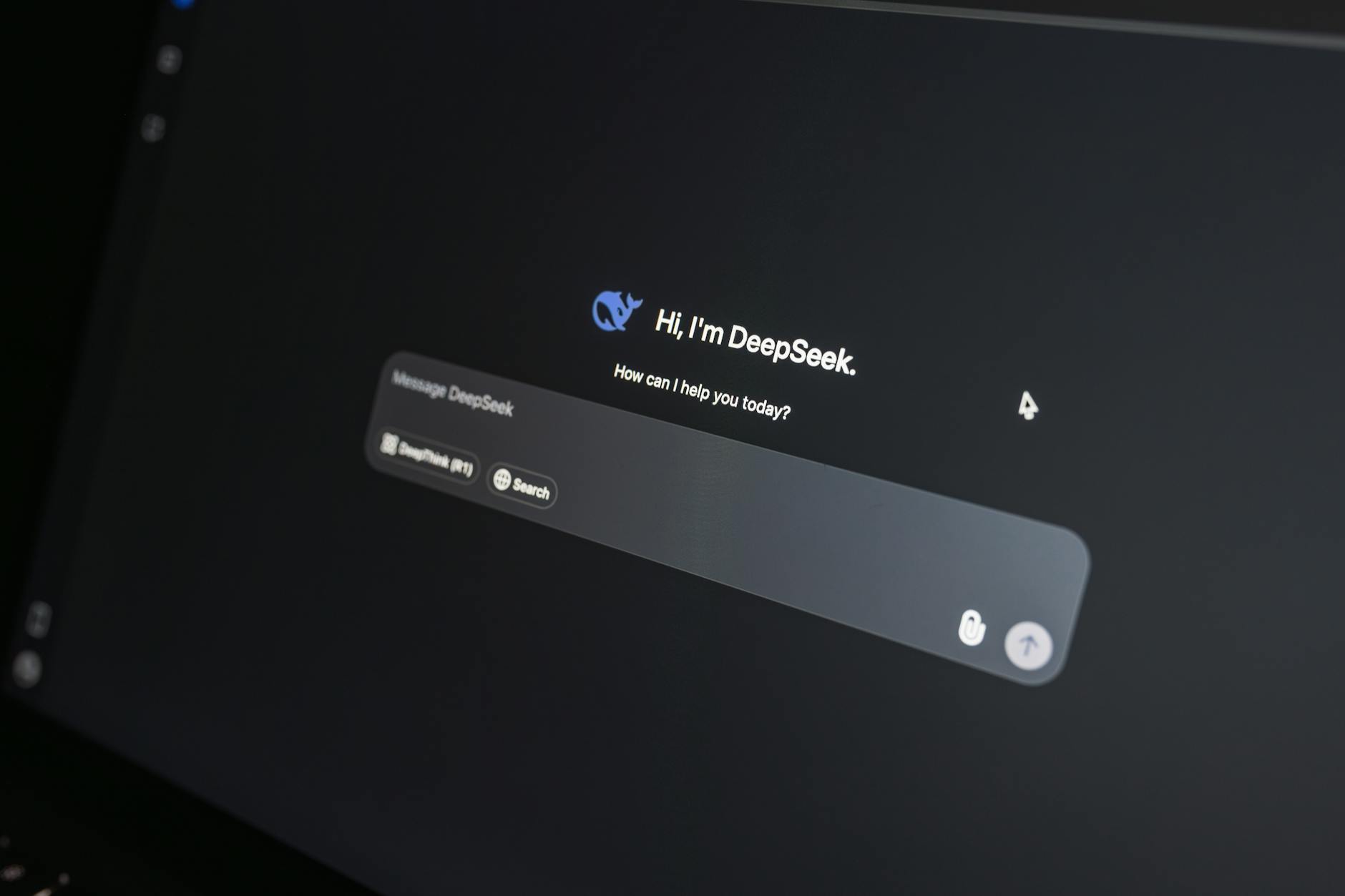
Infrastructure engineers defending AI services face a unique challenge: the attacks exploit legitimate functionality. Attackers employ several sophisticated techniques:
**Model Complexity Exploitation**: Adversaries craft prompts designed to maximize processing time and computational resources. For language models, this might involve requests that trigger extensive reasoning chains or generate maximum-length outputs. For image generation models, attackers request high-resolution outputs with complex parameters.
**Endpoint Enumeration**: Attackers systematically discover and catalog AI service endpoints across the internet. Many organizations inadvertently expose inference endpoints without proper authentication, making them easy targets. Even authenticated endpoints become vulnerable when attackers use stolen credentials or exploit trial account systems.
**Distributed Request Patterns**: Modern AI-targeted DDoS attacks utilize botnets to distribute requests across thousands of IP addresses, mimicking organic traffic patterns. This makes rate-limiting based on source IP addresses largely ineffective.
**Cache Bypass Techniques**: AI service operators often implement caching to reduce infrastructure costs for repeated queries. Sophisticated attackers deliberately vary their prompts slightly to bypass cache mechanisms, ensuring each request triggers a full inference operation.
Infrastructure Costs and Business Impact
The financial implications extend far beyond typical DDoS mitigation costs. AI service operators face a triple threat: increased compute costs from processing malicious requests, potential service degradation for legitimate users, and the infrastructure investment required to defend against these attacks.
Cloud-based AI inference typically runs on expensive GPU or TPU infrastructure. During an attack, these resources scale automatically to handle demand, generating substantial bills before operators can respond. A single incident could consume an entire quarter’s infrastructure budget in hours.
The business impact cascades beyond direct costs. Service degradation affects user experience, potentially driving customers to competitors. For startups and smaller AI service providers operating on thin margins, a sustained attack could prove existential. Even brief outages damage reputation in an industry where reliability is paramount.
Mitigation Strategies for AI Service Operators
Defending against AI-targeted DDoS attacks requires a multi-layered approach that balances security with user experience:
**Authentication and Authorization**: Implement robust authentication for all AI endpoints. API keys should include rate limits tied to verified accounts. Consider requiring payment information even for trial accounts to increase attacker costs.
**Intelligent Rate Limiting**: Deploy rate limiting that considers multiple factors: requests per IP address, requests per account, computational cost per request, and pattern analysis. Machine learning-based anomaly detection can identify suspicious request patterns that simple threshold-based systems miss.
**Request Validation and Filtering**: Implement input validation to reject obviously malicious or resource-intensive requests before they reach inference engines. Set maximum token limits, complexity thresholds, and output size restrictions.
**Cost Monitoring and Circuit Breakers**: Deploy real-time cost monitoring with automatic circuit breakers that throttle or halt service when spending exceeds predetermined thresholds. This prevents runaway costs during attacks while allowing time for human intervention.
**CDN and DDoS Protection Services**: Leverage providers like Cloudflare that offer AI-aware DDoS protection. These services can identify and filter malicious traffic before it reaches your infrastructure, significantly reducing both attack impact and mitigation costs.
**Inference Optimization**: Reduce per-request costs through model optimization, quantization, and efficient serving infrastructure. Lower baseline costs make attacks proportionally less damaging.
The Path Forward
The 312% surge in AI-targeted DDoS attacks signals a permanent shift in the cybersecurity landscape. As AI services become ubiquitous, attacks exploiting inference costs will only intensify. Infrastructure engineers and AI service operators must recognize that traditional DDoS defenses are insufficient against adversaries who understand the economics of machine learning.
Organizations that will thrive are those treating AI endpoint security as a first-class concern from day one—implementing defense-in-depth strategies that account for the unique cost dynamics of inference operations. The question is no longer whether AI services will be targeted, but whether infrastructure and budgets can withstand the attack when it comes.
Send free SMS worldwide
Reach any mobile number in 200+ countries from your browser. No signup, no app.
Send a free SMS →